00
Days
00
Hours
00
Minutes
00
Seconds
.png)
In the realm of B2B prospecting, a well-crafted LinkedIn outreach strategy is crucial for success. By leveraging systematic outreach, businesses can establish meaningful connections and drive growth.
Effective outreach sequences enable companies to personalize their approach, increasing the likelihood of converting prospects into clients. With the right tools, such as WaLead, automating these sequences becomes seamless, allowing businesses to focus on high-value tasks.
By understanding the importance of effective outreach strategies, businesses can optimize their approach to achieve better results. WaLead's capabilities in automating LinkedIn outreach can help streamline this process, making it an invaluable asset for businesses looking to expand their reach.
The strategic value of LinkedIn in B2B prospecting cannot be overstated, given its role in facilitating meaningful connections among professionals. With over 700 million users, LinkedIn offers a vast landscape for businesses to identify and engage with potential clients.
LinkedIn's unique position stems from its focus on professional networking, allowing businesses to target their audience with precision. Unlike other social media platforms, LinkedIn's users are primarily motivated by professional interests, making it an ideal space for targeted LinkedIn outreach. This targeted approach enables businesses to connect with decision-makers and influencers in their industry, fostering opportunities for meaningful engagement.
Systematic outreach on LinkedIn involves a structured approach to connecting with potential clients, using personalized messages and a strategic follow-up sequence. This method is more effective than random connections because it builds a relationship with the prospect over time, improving the chances of conversion. By improving engagement on LinkedIn through systematic outreach, businesses can establish a strong pipeline of potential clients, ultimately driving revenue growth.
Effective LinkedIn outreach sequences are the backbone of successful B2B prospecting, enabling businesses to connect with potential clients in a personalized manner. By understanding the fundamentals of these sequences, businesses can significantly enhance their chances of converting prospects into clients.
Multi-touch outreach campaigns involve a series of strategically planned messages sent to potential clients over a period. This approach allows businesses to build a relationship with prospects, nurturing them through the sales funnel. By incorporating personalized outreach campaigns, businesses can increase the relevance of their messages, thereby improving engagement rates.
The buyer's journey is a critical concept in understanding how prospects move from awareness to conversion. Through LinkedIn messaging templates, businesses can tailor their communication to match the different stages of the buyer's journey. This personalized approach helps in addressing the specific needs and concerns of potential clients at each stage.
Setting realistic goals is essential for the success of any outreach campaign. Businesses should define clear objectives, such as the number of connections to be made or the response rate desired. By setting achievable goals, businesses can measure the effectiveness of their outreach sequences and make necessary adjustments to optimize performance.
Maximizing the impact of LinkedIn outreach sequences begins with strategic planning. This involves understanding your target audience, personalizing your messages, and ensuring consistent engagement.
Identifying your ideal prospect profile is crucial for creating targeted outreach campaigns. This involves analyzing factors such as job title, industry, company size, and specific pain points. By understanding these elements, you can tailor your messaging to resonate with your prospects.
Segmentation is key to personalization. By dividing your audience into distinct groups based on their characteristics and behaviors, you can create more targeted and effective campaigns. Automation tools for outreach can significantly enhance this process by allowing you to manage multiple segments simultaneously.
A content calendar is essential for maintaining consistent engagement with your prospects. It helps you plan and schedule your content in advance, ensuring that your messaging is timely and relevant. This can be particularly effective when combined with optimized LinkedIn connection requests.
The key to effective prospecting on LinkedIn is not so much what you say, but how and when you say it. In most cases, a connection request without a message has a higher chance of being accepted, as it feels more natural and creates less initial friction.
However, if you decide to include a message with your connection request, it should be personalized and unique for each contact. Avoid generic messages or copy-and-paste templates. A good message references the prospect’s profile, a shared interest, or a specific context, and aims to start a conversation, not to sell from the first touch.
Personalization isn’t about writing more; it’s about showing context. Before sending the request, it’s advisable to visit the contact’s profile, understand their role, and if possible, interact with one of their posts or content beforehand. This small gesture increases familiarity and makes your connection feel more natural and relevant.
One of the most effective ways to personalize a connection request is by mentioning shared connections, interests, or contexts. This could be working in the same industry, sharing a similar professional approach, or even having a mutual contact. These types of references help build trust and break the ice organically. For example: “I noticed we both work in sales enablement and share a mutual connection. I thought it would be interesting to connect and share insights about the industry.”
Adapting your connection request to the recipient’s sector can also improve acceptance rates. Making a brief reference to a trend, challenge, or relevant change in their industry shows that you understand their professional context. It’s not about going in-depth or selling, but about demonstrating relevance. This approach works especially well in sectors like technology, sales, marketing, or SaaS, where innovation and current trends are constant.
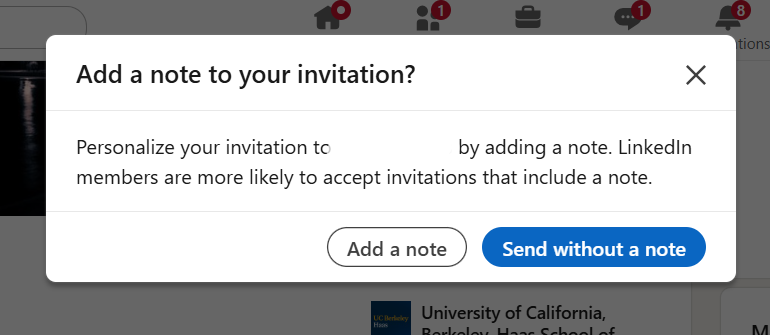
While personalization is key, it's equally important to avoid triggering LinkedIn's spam filters. Certain phrases or overly promotional language can lead to your request being flagged or even blocked.
By following these guidelines and crafting connection requests that are both personalized and relevant, you can significantly increase your acceptance rates on LinkedIn and lay the groundwork for successful outreach sequences.
To maximize the impact of your LinkedIn outreach efforts, it's crucial to design sequences that resonate with your target audience. Effective outreach strategies on LinkedIn involve a combination of personalization, timely messaging, and relevant content.
The number of touchpoints in a LinkedIn outreach sequence can significantly impact its effectiveness. Research suggests that sequences with 3 to 5 touchpoints tend to perform well, as they provide enough engagement without overwhelming the prospect.
A study by HubSpot found that sequences with multiple touchpoints have a higher conversion rate compared to single-touch campaigns. However, the ideal number can vary based on the campaign's goals and the audience's receptiveness.
The timing between messages in a sequence is crucial. Sending messages too frequently can be seen as spammy, while too long intervals may cause prospects to lose interest.
A general guideline is to space messages 3 to 7 days apart, allowing prospects sufficient time to consider the information and respond. This interval can be adjusted based on the prospect's engagement and the sequence's objectives.
%20(1).png)
Content progression is vital in maintaining prospect engagement throughout the sequence. Starting with introductory messages, the content should gradually become more specific and relevant to the prospect's needs.
For instance, the first message could introduce a valuable resource, the second could offer a case study or testimonial, and the third could invite the prospect to a webinar or demo. This progression helps in building a narrative and keeping the prospect engaged.
"Personalization is not just about addressing someone by their name; it's about understanding their needs and tailoring your message accordingly." — Marketing Expert
To maximize the impact of your LinkedIn outreach, it's essential to develop follow-up messages that resonate with your audience. Effective follow-up messages can significantly enhance engagement and conversion rates.
Adopting a value-first approach in your follow-up messages is crucial. This involves providing valuable content or insights that benefit the recipient, rather than making an immediate sales pitch.
By focusing on value, you build trust and increase the likelihood of a response.
Crafting questions that encourage responses is a key strategy in follow-up messages. Open-ended questions that prompt thought or discussion can be particularly effective.
Using these question techniques can help stimulate engagement and foster a dialogue.
The call-to-action (CTA) in your follow-up messages should be tailored to your campaign goals. Whether you're aiming to drive traffic to a website, generate leads, or schedule meetings, your CTA should be clear and compelling.
For example, if your goal is to increase website traffic, your CTA might be "Read our latest article on [topic] here." For lead generation, it could be "Download our exclusive eBook on [subject]."
By aligning your CTA with your campaign objectives, you can improve the effectiveness of your follow-up messages and enhance overall campaign performance.
Personalization at scale is the linchpin of successful LinkedIn outreach campaigns, enabling businesses to connect with their target audience on a more meaningful level. In today's competitive landscape, a one-size-fits-all approach to outreach is no longer effective. Instead, personalized outreach campaigns that address the specific needs and interests of potential clients are crucial for driving engagement and conversions.
Effective personalization begins with thorough research. To gather the data needed for personalized outreach campaigns, businesses can leverage various research methods, including reviewing a prospect's LinkedIn profile, analyzing their company's website, and monitoring industry news and trends. This information can be used to identify key pain points, interests, and needs that can be addressed through targeted outreach efforts.
The use of automation tools for outreach has become increasingly prevalent, with AI-powered solutions enabling businesses to generate highly personalized messages at scale. These tools can analyze vast amounts of data to identify patterns and preferences, allowing for the creation of tailored messages that resonate with individual recipients. By leveraging AI, businesses can significantly enhance the effectiveness of their LinkedIn outreach efforts.
While automation is a powerful tool for scaling outreach efforts, it's essential to strike a balance between automation and authentic communication. Over-reliance on automation can lead to messages that feel impersonal or robotic. To avoid this, businesses should focus on using automation to enhance, rather than replace, human interaction. By combining the efficiency of automation with the nuance of personal touch, businesses can create outreach campaigns that are both scalable and effective.
To maximize the effectiveness of your LinkedIn outreach efforts, understanding the platform's algorithm and safety protocols is crucial. LinkedIn's ecosystem is designed to foster genuine professional connections, and its algorithms are constantly evolving to ensure a positive user experience.
Understanding these dynamics is key to optimizing your outreach strategies and avoiding potential pitfalls that could restrict your account's functionality.
LinkedIn imposes certain limits on connections and messaging to prevent spam and maintain a high-quality user experience. These limits include restrictions on the number of connection requests you can send per day. According to LinkedIn’s official breakdown of connection limits (2025), you can send up to 100 connection requests per week.
If you aren’t using LinkedIn Sales Navigator, it's advisable to keep your weekly requests under 80. Being aware of these limits is essential for planning your outreach campaigns effectively.
Certain activity patterns can trigger LinkedIn's safety protocols, potentially restricting your account. These patterns include sending a high volume of connection requests or messages in a short period, using automated tools that do not mimic human behavior, or receiving a high number of complaints or spam reports against your messages.
WaLead is designed with safety features that protect your LinkedIn account while maximizing your outreach efforts. By incorporating AI-powered message generation and personalization, WaLead helps you craft messages that are less likely to be flagged as spam. Additionally, WaLead's automated sequence management includes safety controls that monitor your activity and adjust your outreach efforts to comply with LinkedIn's limits and protocols, thereby increasing response rates on LinkedIn.
Effective LinkedIn outreach strategies require continuous measurement and optimization. To achieve the best results, it's crucial to track key performance metrics, refine your messaging through A/B testing, and iteratively improve based on response data.
To gauge the success of your LinkedIn outreach sequences, focus on metrics that provide insights into engagement and conversion. These include connection acceptance rates, message open rates, response rates, and conversion rates.
A/B testing is a powerful method for optimizing your LinkedIn outreach messages. By comparing different versions of messages, you can identify which elements resonate best with your audience.
Key Elements to Test:
The insights gained from tracking metrics and A/B testing should inform your iterative improvements. Analyze response data to understand what works and what doesn't, and adjust your outreach sequences accordingly.
By continuously measuring and optimizing your LinkedIn outreach sequences, you can enhance their effectiveness, improve engagement, and ultimately drive better results from your campaigns.
.png)
With WaLead, businesses can now revolutionize their LinkedIn outreach strategies through AI-driven solutions. WaLead's innovative features are transforming the way companies approach LinkedIn outreach, making it more efficient and effective.
WaLead utilizes advanced AI algorithms to generate highly personalized messages, significantly increasing the likelihood of engagement. This AI-powered approach allows for personalized outreach campaigns that resonate with the target audience, driving better results.
The AI system analyzes data to craft messages that are not only relevant but also tailored to the recipient's interests and needs. This level of personalization is crucial in today's competitive landscape, where generic messages often get lost in the noise.
WaLead's automated sequence management ensures that outreach efforts are consistent and timely, without overwhelming potential leads. The platform includes safety controls to prevent over-messaging and maintain a healthy sender reputation.
By automating the sequence management, businesses can focus on other critical tasks while WaLead handles the outreach process. This automation is a key component of automation tools for outreach, streamlining the sales process.
To elevate your LinkedIn outreach, consider implementing advanced techniques that can significantly enhance your campaign's effectiveness. These sophisticated strategies are designed to optimize your outreach sequences, leading to better engagement and higher conversion rates.
Account-Based Marketing (ABM) on LinkedIn involves targeting specific companies and decision-makers with personalized content and messaging. This approach allows you to tailor your outreach efforts to the needs of key accounts, increasing the likelihood of conversion.
Key components of ABM on LinkedIn include:
Content-driven outreach focuses on providing value to your prospects through relevant and timely content. By sharing insightful articles, industry reports, or case studies, you can establish your brand as a thought leader and build trust with your target audience.
Effective content-driven outreach involves:
.png)
With WaLead, companies are achieving unprecedented success in their LinkedIn outreach efforts. Automated LinkedIn outreach has become a game-changer for businesses looking to expand their professional networks and generate high-quality leads.
Joan Carles Sanjurjo, CEO of Heading2Market, a small but ambitious agency, faced common challenges in LinkedIn prospecting. Managing multiple accounts, avoiding daily limits, organizing scattered conversations, and manually analyzing campaign performance were costing him time and efficiency.
With WaLead.ai, Joan Carles completely transformed his lead generation process. The platform allowed him to connect multiple LinkedIn accounts with dedicated proxy IPs, launch advanced sequences of invitations, messages, and follow-ups, and monitor everything in real-time from a single dashboard. The unified inbox centralized all communications, eliminating the need to switch between profiles and tabs, while integrated A/B testing helped optimize messages and cadences to maximize results.
Thanks to this automation and smart analytics, Joan Carles was able to:
In short, WaLead.ai turned a manual, fragmented, and risky process into a scalable, efficient, and profitable flow for Heading2Market.
Want to be our next success story? Get in touch and find out how we can help you scale your LinkedIn prospecting hassle-free.
.png)
.png)
A LinkedIn outreach sequence is a series of targeted messages sent to potential connections or leads on LinkedIn, designed to build relationships, generate interest, and drive conversions.
To create an effective LinkedIn outreach sequence, you need to identify your ideal prospect profile, craft personalized messages, and use a combination of value-first approaches, question techniques, and call-to-action strategies.
Automation tools like WaLead can help streamline your LinkedIn outreach efforts, saving time and increasing efficiency, while also providing features like AI-powered message generation and personalized messaging.
Essential metrics to track include response rates, connection acceptance rates, message open rates, and conversion rates, which can help you optimize your outreach efforts and improve results.
WaLead allows you to scale your outreach efforts by automating repetitive tasks, providing personalized messaging at scale, and integrating with your existing sales stack, enabling you to manage multiple campaigns efficiently.
LinkedIn is the world’s largest professional platform, used for networking, recruiting, sharing...
Import leads from CSV or Sheets into WaLead and run scalable, automated LinkedIn outreach campaigns.
Get step-by-step tips for using activity timelines and status updates on LinkedIn
.png)
.png)
.png)

.png)